Subscribe for exclusive deals.
We do not share or sell your information.

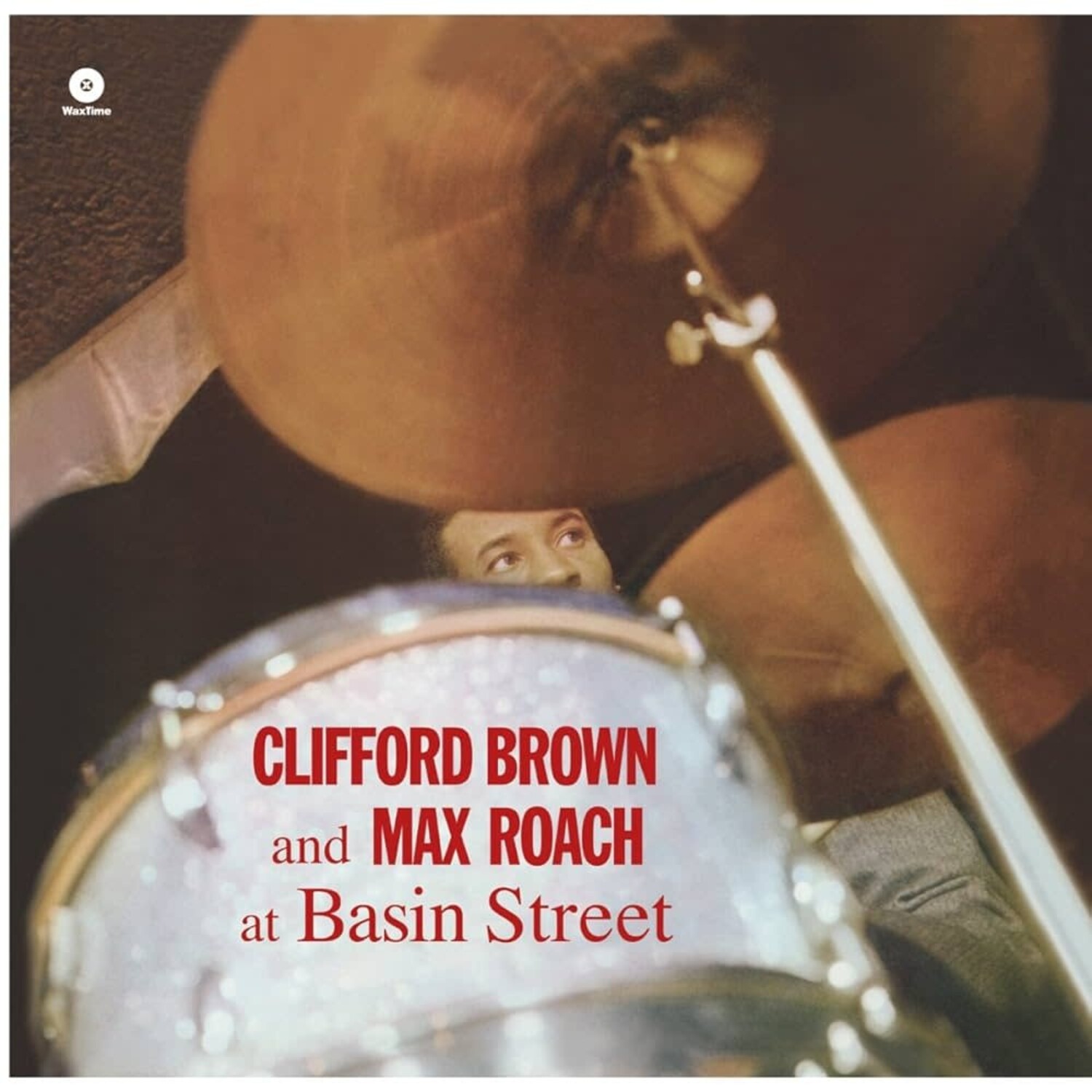




The erstwhile team has made the best-selling list before, and this new issue could be the best of all their disk efforts. Here one may realize the great loss to jazz when Brown and pianist Powell perished recently in an accident. Besides particularly clean, soaring and inspired trumpeting by Brown, this offers fertile, dynamic, Parker-inspired tenor by Rollins and the usual model “melodic” drumming by Roach. A surprising, ingenious Love Is a Many-Splendored Thing (4:09) can grace a wide variety of deejay segs.
Cashbox : 08/11/1956
In midst of building solid jazz reputations trumpeter Clifford Brown and pianist Richie Powell lost their lives in an auto accident a few months ago. Examples of what the jazz world is going to miss is available in an EmArcy issue of Brown, Powell, Max Roach (drums), Sonny Rollins (tenor sax) and George Morrow (bass) on 7 skillfully played numbers. Powered by Brown’s trumpet and Roach’s drums, the supple piano of Powell (who composed 3 tunes on the set) and Sonny Rollins’ expressive tenor sax, moments of striking jazz spontaneity are frequent. Here’s a jazz entry that should become a collector’s item.
Cleveland Plain Dealer
Glenn C. Pullen : 08/11/1956
Clifford Brown & Max Roach at Basin Street demonstrates that a great team was broken up by Brown’s recent death. His amazingly fleet, crisp trumpet notes give a glittering sheen to this set, particularly Love is a Many Splendid Thing and Powell Prances. Roach’s fine drumming and Richard Powell’s swingy piano seem remarkably disciplined here.
Miami Herald
Fred Sherman : 08/19/1956
Two Albums Are Memorial to Young Trumpeter
Modern jazz was dealt a setback two months ago when young trumpeter Clifford Brown was killed in an auto accident while on the way to a night club engagement in Chicago. He had just done a date in his hometown of Wilmington, and it had been sort of a celebration of the local boy makes good type.
Also killed in the highway crash were pianist Richie Powell (Bud’s young brother) and his wife.
It was is if Brown was destined to find his death on the highway. In 1950, also in June, he was injured seriously and spent almost a year in a hospital. He was just 20 then. Three years later he was hailed by jazz critics as the new star of the trumpet. But now it is all over except for the records. And this week we have two albums. One is EmArcy’s called Clifford Brown and Max Roach at Basin Street. The other is Prestige’s Sonny Rollins Plus Four.
It is the same quintet on both albums. With Brown are drummer Roach, tenor saxophonist Rollins, bassist George Morrow and pianist Powell.
The album covers were printed before Brown’s fatal accident. The EmArcy set, recorded Jan. 4 and Feb 16-17 is billed as providing “the most effective picture to date of the degree of integration, spirit and swing achieved by Brown and Roach and their worthy cohorts.” In a supplement mailed to critics, EmArcy says this is “an album which may well be considered a memorial” to Brown and then adds that “it will someday be considered a collector’s item since it is the last LP ever to be released by the great combination of Brown and Roach.”
That made me curious about the Prestige product. The recording date isn’t given, so I got in touch with prexy Bob Weinstock. He said his album was recorded March 22 at Van Gelder’s studios in Hackensack, NJ.
I am betting three to one that it won’t be long before somebody is out with a Clifford Brown album that sells the “memorial” angle heavy on the album cover.
When that happens, I ask you to keep these two fine albums in mind. They are new and fresh, not something dredged up from the tape cans.
For review purposes, I think it best to separate them.
Prestige Preferred
The Prestige product is preferred in this corner because the two horns are picked up more cleanly. In Valse Hot, Brown has a solo that is a real tingler. You can almost see him stepping up to the mic for his bit. I had the feeling he had stepped right into the room.
And I had the same sensation with some shining work by Rollins on Kiss and Run. I head it on equipment with a woofer and a tweeter.
High point in the album is the dueling by Rollins and Brown on Pent-Up House, a Powell original. This track is tremendous.
Honors Shared
EmArcy’s album is more of a team victory with drummer Max Roaching emerging the strong man of the session. He lays the groundwork for a frantic kind of jazz with a stunning beat.
For those of you who think of the drum as an oom-pah-pah instrument, I urge you to listen to Roach work on this album. Particularly his finesse on Time, a Powell original.
Rollins is exciting on I’ll Remember April, chasing with Brown through all the melodic possibilities of the ballads.
And the three ballads on the opening side serve as an overture before the quintet breaks out with a bit called Powell’s Prances with the trumpet and drum driving hard.
This is good jazz.
Providence Sunday Journal
Philip C. Guion : 08/12/1956
The late Clifford Brown was a trumpet player solidly in the modern tradition with exquisite taste and a well-rounded style which matched beautifully with that of his partner, Max Roach, the eminent drummer.
The last album Brown made was Clifford Brown and Max Roach at Basin Street, a new LP release by EmArcy, which, like the other records made by this pair, is a joy to behold. Brownie’s trumpet, as always, is as fleet-footed as a finance man after a feeling client.
Max’s drumming is the wonderful bouncing, driving, yet tasteful thing, that it has always been. And there is yet more.
Sonny Rollins is on tenor sax in the quintet and Richie Powell, brother of the illustrious Bud, is on piano. George Morrow plays bass.
One side of the record is devoted to two standards and an amusing dissection of Love is a Many-Splendored Thing. The standards are What is This Thing Called Love and I’ll Remember April, both given in full and complete treatment.
Rollins plays a warm-hearted tenor on the standards and gets a little more bite into it on the other side which consists of three Richie Powell originals and one by Tadd Dameron.
The best is Gertrude’s Bounce which outlines the way a certain sprightly woman walks. Everyone will know some woman for whom this song could serve as a theme.
San Francisco Chronicle
Ralph J. Gleason : 07/03/1956
Jazz Lost a Star when Clifford Brown Died
Clifford Brown would have been 26 this October and he had already made a considerable reputation for himself in the jazz field. In 1954 he won the Down Beat International Critics Poll as New Star on the trumpet. Last year he ranked sixth in the popular poll the same magazine conducts among its readers at the end of the year.
There was every indication he would become one of the great trumpet players of modern jazz. He was really one of the great modernists already, but just a little more time was needed to make it official.
It will never happen now, because Brownie was killed last week in an auto crash with Richie Powell, Bud Powell’s younger brother and a fine pianist in his own right, and Powell’s wife. They were driving across country to an engagement in Chicago. It was just one of those things you never know about. They pulled out to pass a truck and another truck hit them.
Jazz musicians have a way of dying like this. They travel thousands of miles a month making jumps from job to job. Frank Teschmacher, Stan Hasselgård, Bob Gordon and Ray Whetzel are a few of the fine young musicians who have ended their short careers in a mass of wreckage on some highway.
Clifford Brown was born in Wilmington, DE and first played jobs around Philadelphia. He studied music at Delaware State and Maryland State on scholarships. In recent years he had teamed with the great drummer Max Roach in a fine quintet which was firmly established as one of the best in the jazz field. He was beginning to make money, too. He had a recording contract with EmArcy and several albums to his credit. One of them, Clifford Brown With Strings, was a surprisingly lyrical series of performances which raised his stature from that of a free-swinging jazzman to an artist with sensitivity and taste. He’s also on a fine Pacific Jazz LP with Max Roach and on various other albums on Blue Note and Gene Norman Presents.
A fine trumpeter with a swing, interesting, always surprising line of musical thought, Brown had taken the style of Dizzy Gillespie and instead of retreating to form an entirely new concept, had extended it, smoothed it and tried to make it his own. At the very least he had established his right to be considered an artist, not an imitator. At his best, he had indicated he was capable of carrying the style still farther.
None of this will happen now. And the incredible part of it is that Brownie almost lost his life once before. Almost exactly six years ago – June, 1950 – he was critically injured in an auto crash and gave up his career only to resume it, aided by the encouragement of Dizzy Gillespie. He was a quiet little guy, saying everything he wished through his music. Jazz will miss Clifford Brown and Richie Powell, too.
—–
Wichita Falls Times
Bob Herdien : 08/19/1956
Gem of the new sides is Clifford Brown and Max Roach on Basin Street. The title is misleading, true, because there’s a total absence of Dixieland, but the combo that includes Sonny Rollins, tenor, George Morrow, bass, and sparkling Richie Powell, piano, comes forth with a fine performance.
Rollins’ tenor is great throughout. He’s a cool, inspired workman, opposed to the Stan Getz school, who is at his best on What Is This Thing Called Love? Throughout, Roach’s drum work and Brown’s fine trumpet are great, but it’s Rollins who steals the show. The 26-year-old New Yorker joined the group last year after working with such as Art Blakey, Tadd Dameron, Bud Powell and Miles Davis. He lives up to all his advance billing here.
—–
Down Beat : 09/19/1956
Jack Tracy : 4.5 stars
Clifford Brown and Max Roach at Basin Street reemphasizes the loss jazz suffered when Clifford and Richie Powell died. Brownie’s loss is more immediate; one of the first of the younger trumpeters to break away from the cool sound and go back to Dizzy and Roy and Navarro for inspiration, he is a dynamo here, working horn-in-sticks with Roach. Sonny Rollins made this a power-laden group solowise when he supplanted Harold Land on tenor, and Powell and bassist George Morrow are two-thirds of a cohesive rhythm section.
What Is This Thing drives hard, with Brownie and Rollins stickouts; Many Splendored Thing, taken up-tempo, is pushed initially by Clifford’s sailing solo, moves into a staccato, yet rolling Rollins, then fine Richie, followed by a Roach drum excursion.
April and Prances also move at good speed, with Time the first and only ballad to show up. Written by Richie, it is mindful of Leavin’ Town, recoded by Zoot Sims with Chubby Jackson some five years ago, and is marked by a serene chorus midway from Powell.
The Scene, written by Tadd Dameron, displays perhaps the best Rollins work of the date. Gertrude’s Bounce is again Powell’s composition – an oddly-constructed, provocative line that undoubtedly will become used by a lot of groups. Indefatigable Clifford solos first, Sonny next, with Powell comping neatly, then soloing, followed by more acrobatics from Max.
Energetic, full-bodied jazz, this, and thoroughly recommended.

