Subscribe for exclusive deals.
We do not share or sell your information.

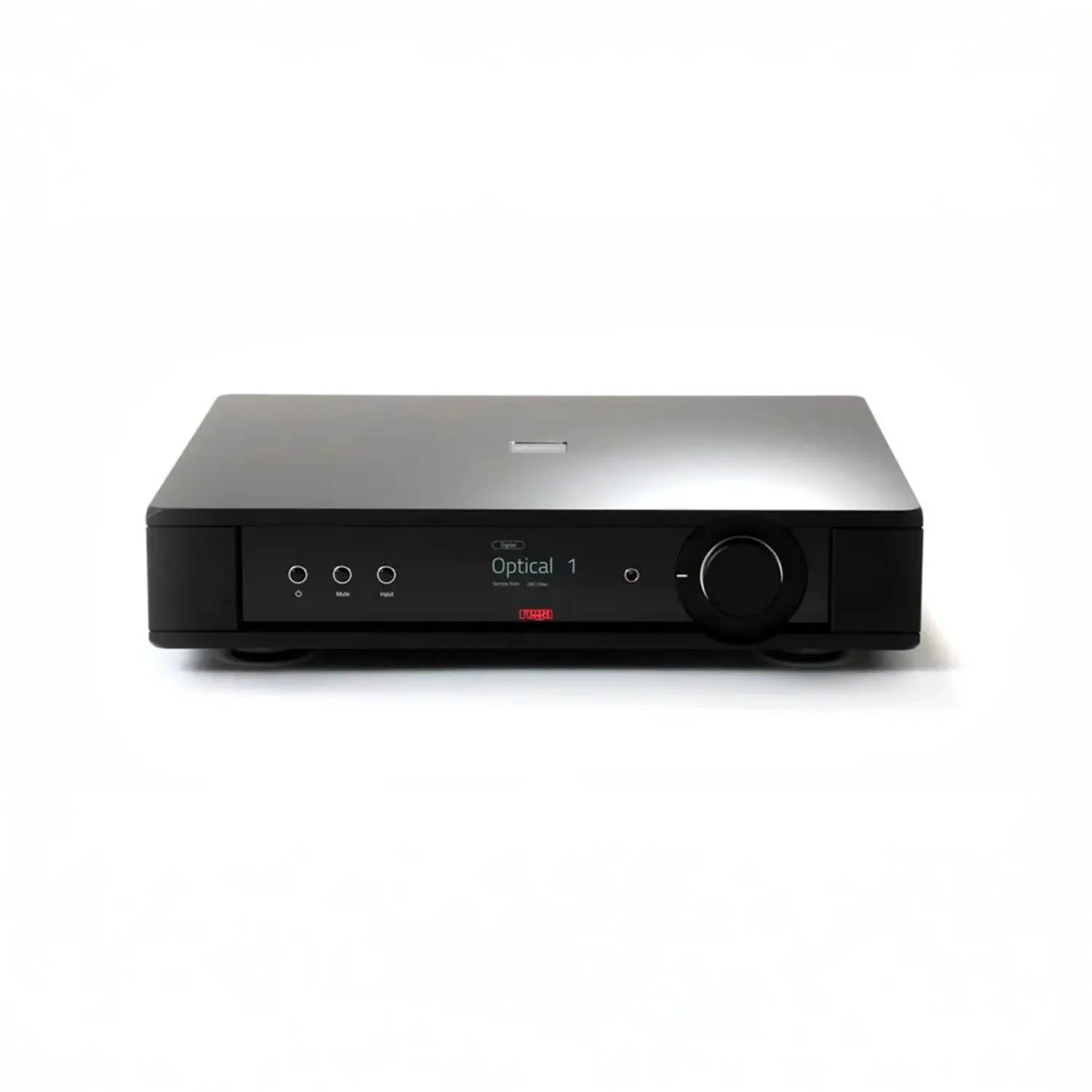




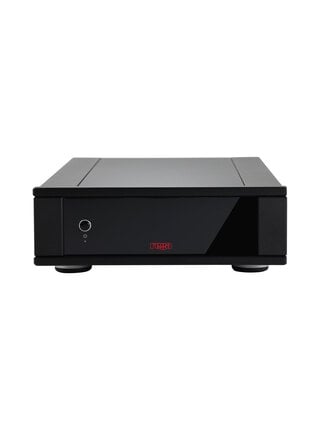
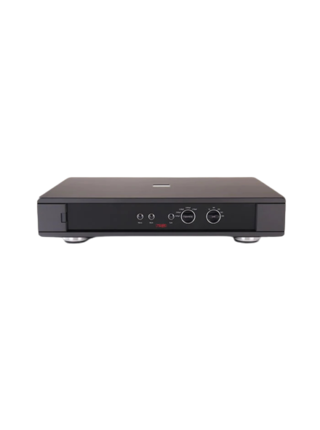
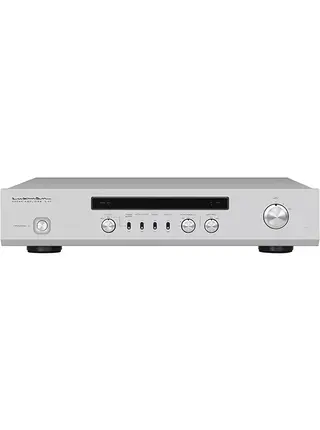
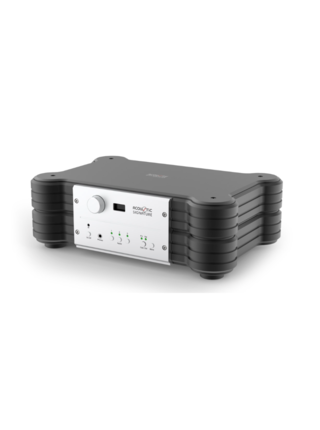
Capturing the detail in a quiet performance is key to delivering an engaging sound. A well-engineered “clean” pre-amplifier preserves all those subtle details instead of masking them with unwanted noise. This fully featured reference pre-amplifier offers great flexibility and usability, with the convenience of a high-performance DAC, a discrete headphone amplifier, and a full-colour IPS display.
Main Features:
- Fully discrete symmetrical circuitry in the core signal path
- High-performance DAC with S/PDIF and USB inputs
- Galvanically isolated asynchronous USB input
- Discrete headphone amplifier
- Full colour IPS display
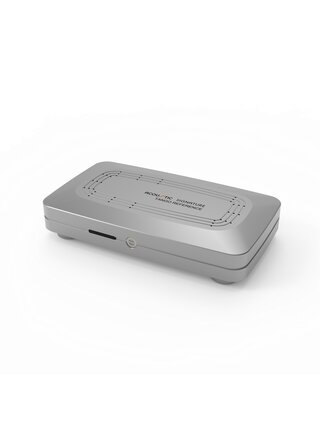
- Custom backlit Orbit remote control
- Standby mode
- Lifetime Warranty against manufacturing defects
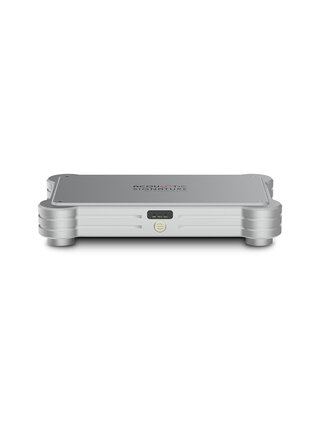
The Rega Mercury Reference pre-amplifier is schooled in the art of silence. Designed, engineered, and built in Britain as a no-compromise unit, it is the largest & most complex electronic product Rega has created in its lauded history. Housed in a custom CNC-machined aluminum case, Mercury boasts an exceptionally low noise floor that helps account for its thrilling dynamic range, tonality, and clarity. It captures the most nuanced details in your recordings and lets them blossom with their intended colors, textures, and intricacies, all the while giving you extraordinary flexibility and usability.
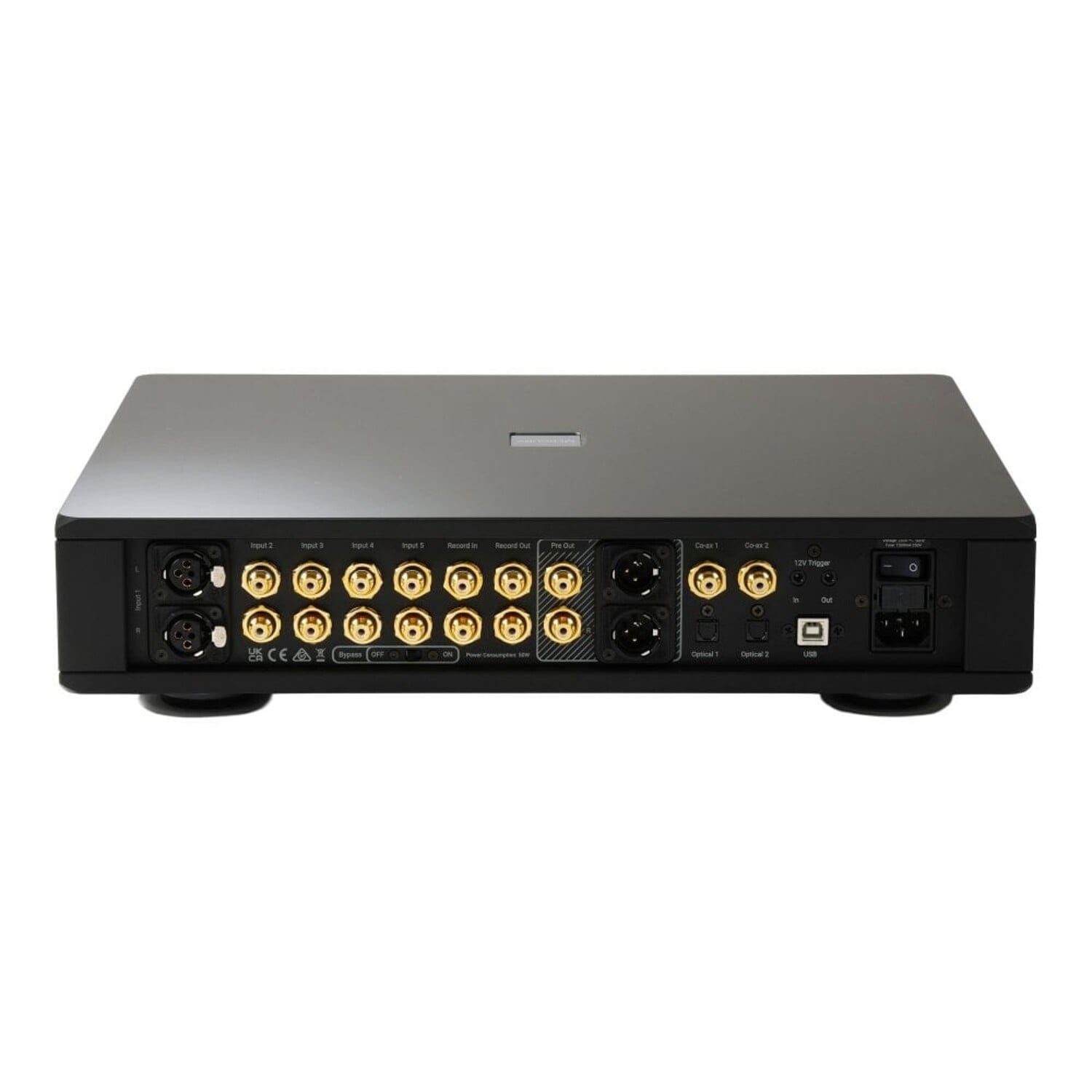
Everything for the 31-pound Mercury, which sports parallel connected Wolfson DACs with S/PDIF and USB inputs, as well as a discrete headphone amplifier, begins with the architecture. As attested by its completist-minded connectivity — four sets of RCA inputs, one pair of balanced inputs, a record input, a record output, one pair of balanced outputs, a pre-out, two coaxial inputs, and two optical outputs, plus a 12V trigger — this is no ordinary device.
Mercury uses a discrete, differentially driven, fully symmetrical, high-linearity and-bandwidth common base voltage amplifier throughout the signal path. Each stage has complementary, high-current drive capability Class A output stage amplifiers — symmetrical amplifier circuit topology that provides the necessary voltage and current drive to enable Mercury to perform with minimum distortion. Critical amplification stages use Linear Systems ultra-low noise FET transistors in the differential quad pair input stages. The signal path from the analog output of the DAC ICs to the output of the preamplifier is entirely symmetrical. And the Alps Blue Velvet RK27 volume control is paired with symmetrical common base driver stage amplifiers. The main outputs are DC coupled to eliminate output coupling capacitors.
Anchored by a generously rated toroidal transformer feeding a linear power supply, Mercury's discrete, symmetrical tracking power supply uses fast diodes and low-noise voltage reference. Each stage has its own localized capacitance, multiplier power supply, and LED-referenced current generators for voltage references. To maximize headroom, Mercury leverages a higher-than-normal power supply voltage that comes in 60% higher than that normally found in high-end preamplifiers.
A similar statement can be made about the headphone amplifier. It essentially operates like a mini-Solis power amplifier as it uses the same symmetrical common base driver stage circuitry. Plus, it touts high-voltage and current-drive capability, enabling the headphone output to drive both low- and high-impedance headphones with ease.
When it comes to protection, the 3.8" x 17" x 15" ( H x W x D ) Mercury has an extensive circuit that monitors the DC output levels of the main and headphone output. It works in conjunction with the supervisory circuit. Mercury also uses microcontroller-based slow start and standby, and a power-supply supervisory circuit to power-up the generously rated toroidal transformer from standby, keeping the in-rush current to a minimum. In another sign Mercury overlooks nothing, the front-panel display uses a IPS LCD display with a linear DC adjustable backlight to eliminate noise. The slow start, power-supply supervisory microcontroller, protection circuits, and display all have their own dedicated power supply isolating it from the audio.
General Specifications
- Inputs- S/PDIF COAX & Optical: 16-24 bit @ 32/44.1/48/88.2/96/176.4/192kHz
- USB Input: 16-32 bit @ 44.1/48/88.2/96/176.4/192kHz PCM or DSD64 ( DoP ), Asynchronous, Power Consumption 0 Watt (<0.5mA)
- Pre-Amplifier- THD+N: Typically 0.001% @ 1kHz 2V Unbalanced or 4V Balanced 0dB gain
- Pre-Amplifier- Frequency Response: 8Hz (-0.5dB point) to 28kHz (-0.5dB point) at 0dB gain Balanced Input/ Output
- DAC - THD+N: Typically 0.0045% @ 1kHz 0dBFS 2V Pre Out
- Headphone Amplifier - Maximum Level 33Ω: 9V / 2.5W @ 0.1% THD+N ( 230V/120V )
- Headphone Amplifier - Maximum Level 240Ω: 10.85V / 0.5W @ 0.1% THD+N ( 230V/120V )
- Headphone Amplifier- THD+N: Typically 0.0035% @ 1kHz 2V into 240Ω or 33Ω
- Power Consumption: 50 Watt
- Power Consumption ( Standby ): 0.4W ( activated automatically if no signal present after 20 minutes )
- Net Dimensions W x H x D: 17 "x 3.8 "x 15"
- Weight: 31lbs

